You likely have numerous untouched educational files or have attended various classes, yet when it comes time to speak, the words seem to vanish. The reason you haven’t achieved your desired results isn’t a lack of intelligence or aptitude; it’s that you’ve unknowingly been following an inefficient path.
Many conventional approaches offer limited returns. In this article, we’ll candidly and clearly examine 20 common language learning mistakes. I promise that correcting these will make your journey significantly sweeter and faster.
Part 1: Practice Mistakes (What to Actually Do)
1. Relying 100% on Classes
Thinking that merely attending class works miracles.
🔗 بیشتر بخوانید: ۲۰ راهکار مؤثر برای این که خانوادهای شاد و صمیمی داشته باشیم_به رنگ صبح
- Why it’s wrong: The instructor is only a guide. Choosing the wrong class can derail your progress, especially in early years when linguistic foundations are formed. Selecting a standard, interactive learning environment is vital—whether for yourself or when searching for the best kids’ English class in Mashhad or any other city for your child. The methodology must be interactive, not just passive attendance.
- The Fix: Take ownership of your learning; don’t just wait for the next class.
2. Watching Movies Only for Entertainment
You watch films but engage in no active practice.
- Why it’s wrong: Until your mouth moves and you engage actively, you won’t see significant conversational improvement.
- The Fix: Use the shadowing technique: listen to sentences and repeat them immediately.
3. Obsessing Over Accent
Trying to sound exactly like a Hollywood actor.
- Why it’s wrong: Priority one is “correct pronunciation” so you are understood. Having an accent is perfectly fine.
- The Fix: Focus on saying words correctly, not stylishly.
4. Being Input-Only (Don’t Just Consume)
You read books and listen to podcasts but never speak or write.
🔗 بیشتر بخوانید: تأخیرهای استارشیپ به گمان زیاد علتشوند ناسا از برنامه فرود روی ماه عقب بیفتد
- Why it’s wrong: Language is a two-way skill. You must produce output to learn.
- The Fix: Talk to yourself, write a daily journal, or record your voice.
5. Permanent Dependence on Subtitles
You always watch movies with Persian subtitles.
- Why it’s wrong: The brain is lazy; it prefers reading over listening. This prevents your listening skills from strengthening.
- The Fix: Gradually drop Persian subtitles, switch to English ones, and eventually watch without any.
6. Ignoring the Culture of the Language
Learning the language in isolation from its culture.
- Why it’s wrong: Many terms are culturally rooted; word-for-word translation renders them meaningless.
- The Fix: Familiarize yourself with slang, idioms, and the lifestyle of native speakers.
7. Quitting at the “Learning Plateau”
You hit an intermediate level, feel stuck, and quit.
🔗 بیشتر بخوانید: دیکتاتورهای کاریزماتیک؛ ۱۰ رهبر که با جادوی کاریزما جنایت کردند_به رنگ صبح
- Why it’s wrong: This apparent stall is natural—it signals your brain is processing information.
- The Fix: Be patient, don’t skip this phase, and simply diversify your practice methods.
Part 2: Study Strategy Mistakes (How NOT to Study)
8. Memorizing Vocabulary Lists (Parrot-Style)
Writing a column of English words and a column of Persian translations is one of the oldest mistakes.
- Why it’s wrong: Words escape memory. The brain retains words attached to a “story” and “context,” not in isolation.
- The Fix: Always learn words inside a “sentence” so their usage sticks.
9. Over-Focusing on Grammar
Constantly analyzing why a specific rule was applied.
- Why it’s wrong: Over-analysis causes you to freeze while speaking, destroying fluency.
- The Fix: Absorb grammar subconsciously through massive input (listening and reading).
10. Translating in Your Head (Persian to English)
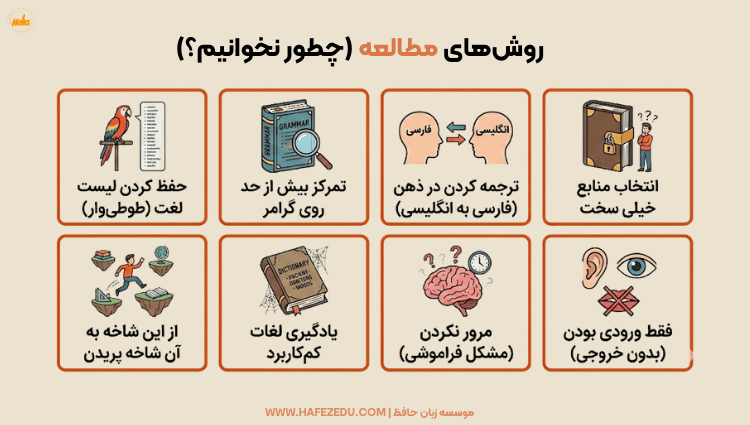
Do you formulate the sentence in Persian first, then translate mentally?
- Why it’s wrong: This kills your speed and makes your sentences smell like translations.
- The Fix: Force yourself to think directly in English using simple words. For instance, when you see an apple, instantly say “Apple.”
11. Choosing Overly Difficult Materials
Starting with complex movies or news when you’re just beginning.
- Why it’s wrong: Incomprehensible input leads to rapid burnout and discouragement.
- The Fix: Select material slightly above your current level (i+1), not miles ahead.
12. Hopping Between Resources
Constantly switching apps, books, and classes.
- Why it’s wrong: You never master any topic deeply.
- The Fix: Pick one standard resource and stick with it to the end.
13. Learning Low-Frequency Vocabulary
Memorizing obscure, fancy words you’ll likely never use.
- Why it’s wrong: You clutter your brain uselessly while lacking mastery of basic, high-frequency words.
- The Fix: Focus first on the top 500 to 1,000 most common words.
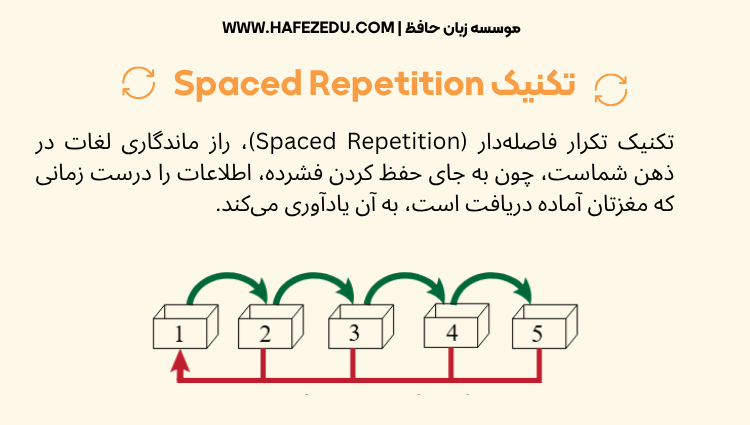
14. Not Reviewing (The Forgetting Problem)
Thinking one read-through is enough.
- Why it’s wrong: Without review, 80% of material is forgotten within days.
- The Fix: Use the Leitner box system or apps like Anki for spaced repetition.
Part 3: Mental Barriers (What Goes On In Your Head)
Before opening textbooks, we must organize our mindset.
15. Comparing Yourself to Others
“That person mastered it in 6 months; I’m still at square one.”
- Why it’s wrong: Everyone has different circumstances and free time. Comparison only drains your energy.
- The Fix: Your only rival is “yesterday’s you.” Being better than yesterday means you’re winning.
16. Relying on Motivation Instead of Habit
Believing you must feel “in the mood” to study.
- Why it’s wrong: Motivation fluctuates. Waiting for the right mood makes learning inconsistent.
- The Fix: Focus on “discipline.” Even on tired days, dedicate 10 minutes to keep the habit chain unbroken.
17. The Myth “I’m Too Old”
Many believe that because they’re no longer teenagers, they can’t learn a language.
- Why it’s wrong: The human brain retains neuroplasticity for life. Adult learning methods differ, but the capacity doesn’t vanish.
- The Fix: Discard this excuse and start today.
18. Setting Overwhelming, Scary Goals
“I want to speak like a native in 3 months!”
- Why it’s wrong: Lifting a boulder guarantees failure and despair.
- The Fix: Set small, achievable micro-goals. Example: “This week I focus only on mastering the Simple Present tense.”
19. Perfectionism (Waiting to Be Ready)
Waiting until grammar is perfect before opening your mouth.
- Why it’s wrong: You learn by making mistakes. Language is like driving; you can’t learn solely from a book. You must hit the road and stall the engine a few times!
- The Fix: Permit yourself to speak “incorrectly.” The goal is communication, not passing an exam.
20. Fear of Judgment
Worrying about what others think if you make a mistake.
- Why it’s wrong: Most people admire the effort to speak their language; they don’t mock it.
- The Fix: Build confidence. Attempting to acquire a new skill is inherently respectable.
Final Word: Correct Your Course
This list of common language learning mistakes proves you don’t need to work “harder,” but “smarter.” If you recognized a few of these habits, don’t panic. Awareness is the first step. Starting today, transform these small habits one by one. Rest assured, language learning is an enjoyable journey—provided you step in the right direction.